Proprietary Knowledge Layer
The central knowledge infrastructure underlying the COASE execution environment. How the Knowledge Layer works
Institutional-grade financial modelling for boards, investors and lenders. Advisory-driven. Technology-enabled.
Sample reports · all 29 in the catalogueFictional companies, illustrative figures
Case studiesAll case studies
 01Liquidity Planning Ahead of a DivestmentRead the case study →
 02Recovery Planning and RecapitalisationRead the case study →
 03Assessing a Cross-Border Industrial CombinationRead the case study →
 04Valuing Energy Assets for a TransferRead the case study →
 05Working Capital, Cash Planning and Faster CloseRead the case study →
 06Board Reporting and Performance ManagementRead the case study →
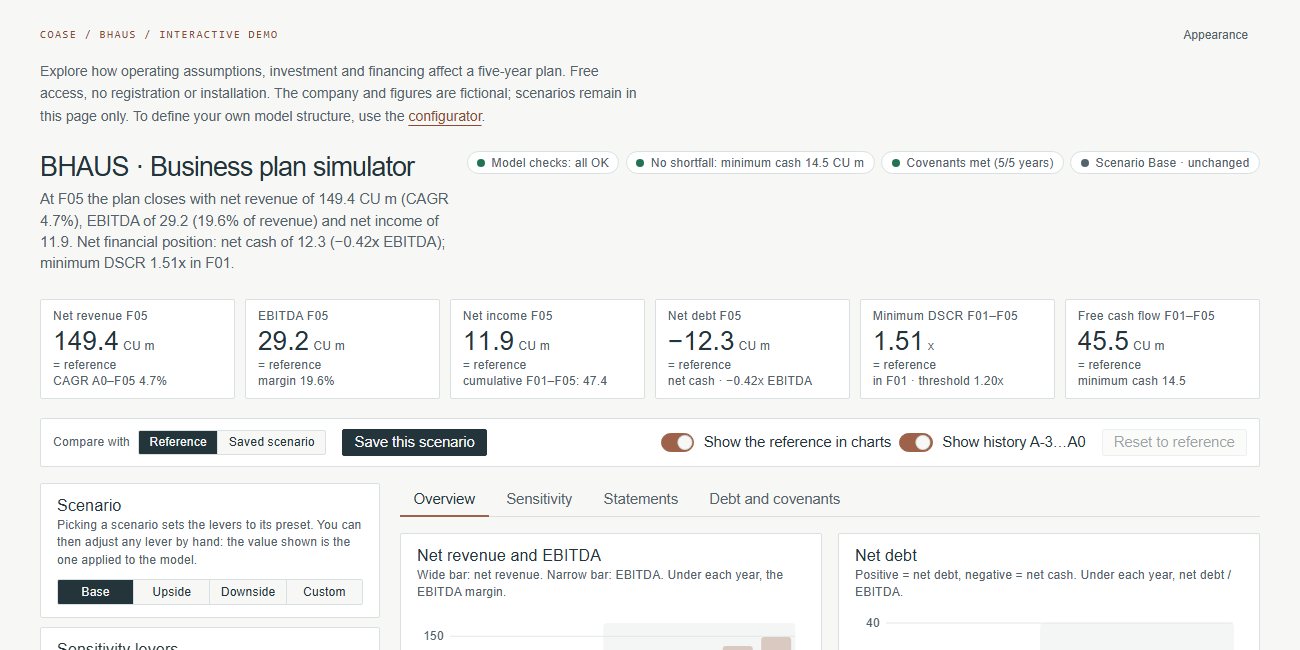
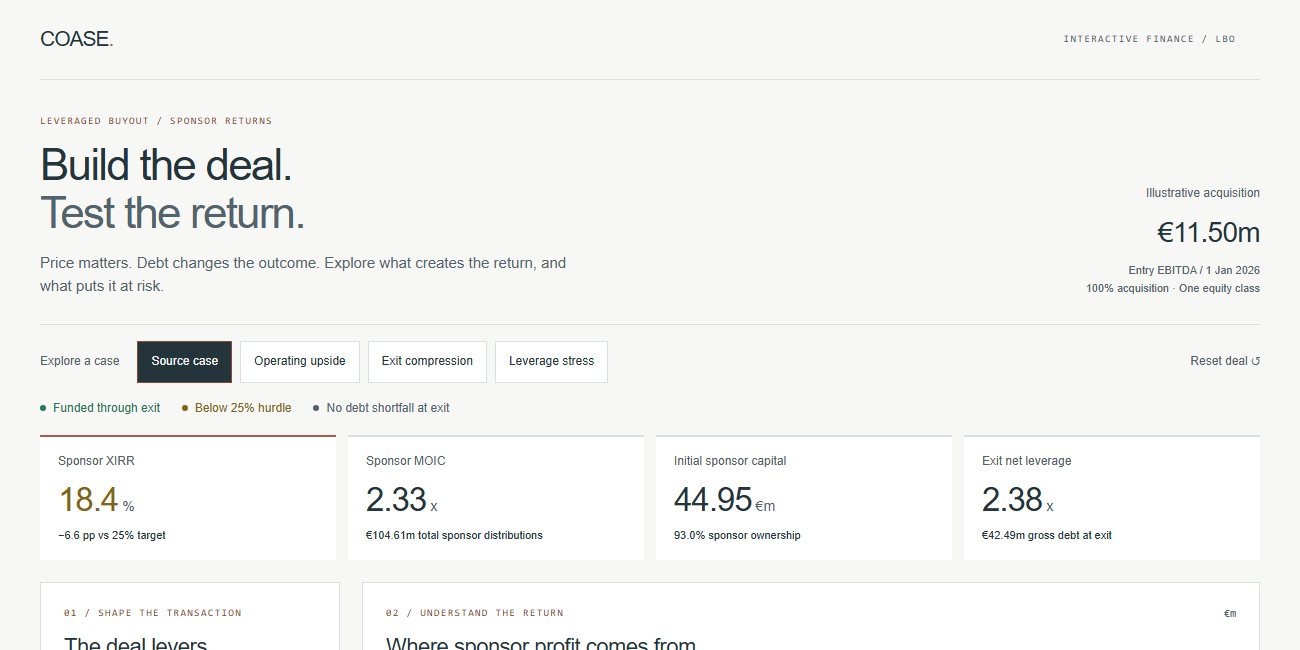
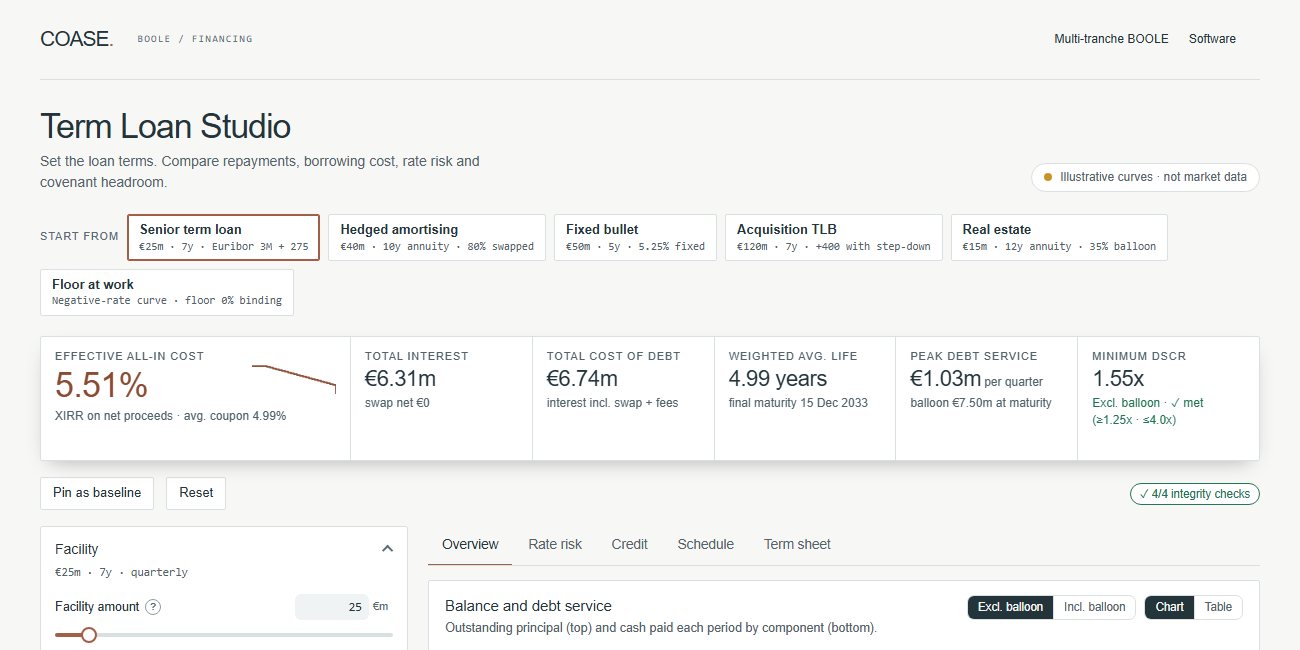
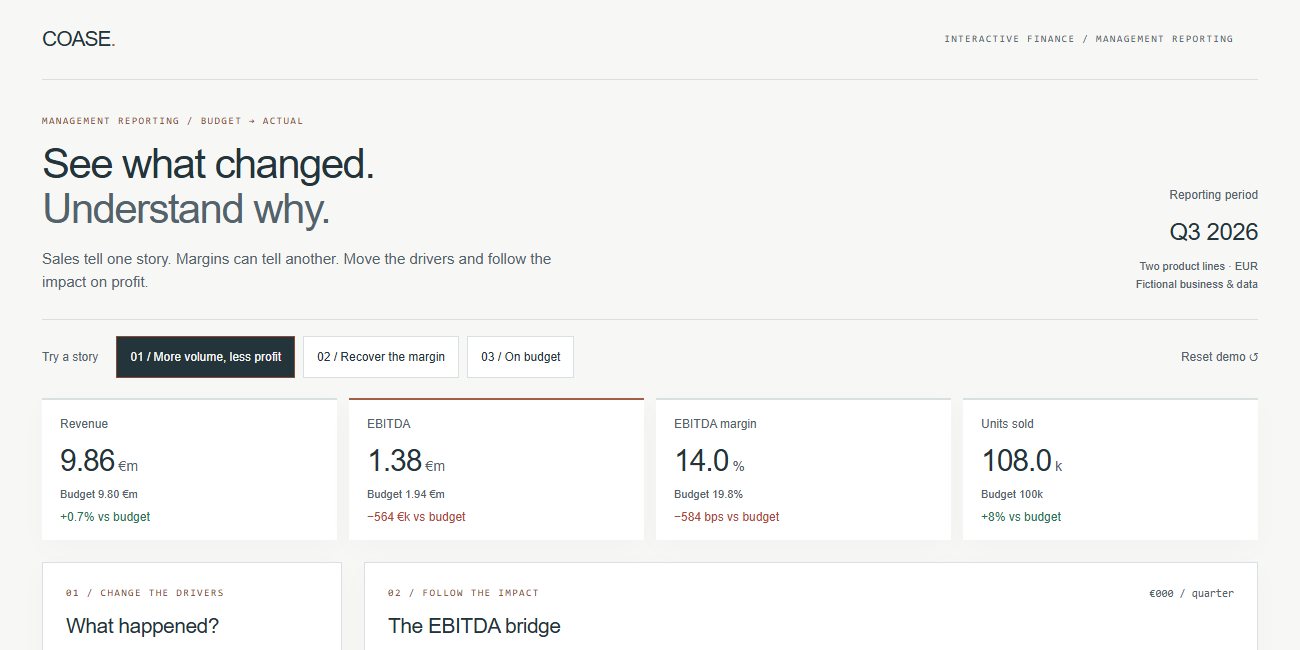
Interactive dashboards
The central knowledge infrastructure underlying the COASE execution environment. How the Knowledge Layer works
The flagship rule-based system for structuring professional reports.
Transforms trial balance data into standardised financial classifications aligned with OIC, IFRS or US GAAP reporting frameworks.
Runs multi-variable discounted cash flow analyses and measures changes in enterprise and equity value as assumptions vary.
Models financing terms, covenant thresholds and repayment waterfalls to assess debt servicing and resilience under alternative macroeconomic scenarios.
Integrates financial forecasts and operating assumptions to assess debt capacity, model downside scenarios and evaluate restructuring waterfall distributions.
Reviews Excel workbooks for formula consistency, structural dependencies and deviations from FAST modelling conventions.
Scope and approach are defined collaboratively when the requirement is still emerging.
A specified service with scope, timetable and fee agreed before work begins.
Specialist financial planning and analysis capacity retained for an agreed number of days each month.
You know which model, plan or review you require.
Defined-scope engagement → optionally, Recurring FP&A
You know the intended outcome but have not yet defined the full scope.
Advisory mandate → Defined-scope engagement → optionally, Recurring FP&A
You need specialist capacity on an ongoing basis.
Recurring FP&A
Advisory mandate. For when the requirement still has to be defined. It is agreed in stages and ends once the brief is clear; the build then continues as a defined-scope engagement.
Defined-scope engagement. Every service in the catalogue can be bought this way: configure it, and scope, timing and fee are set before work begins.
Recurring FP&A. Works on its own, when a finance team needs specialised capacity, or follows a mandate to keep models and reporting running.
Define the scope together.
Describe what needs to be assessed, built or improved, and what is already in place. The modelling, analysis and support required are then defined with your team and the advisers involved.