Restructuring, Turnaround and Crisis ManagementEarly Warning and Financial GovernanceForward-looking monitoring supported early identification of financial stress.Read case studyClose case study+
Context
An industrial business needed more timely information on liquidity and debt sustainability.
Intervention
An assessment of finance processes led to forward-looking indicators, reporting responsibilities and escalation thresholds.
Outcome
The resulting dashboard supported periodic monitoring and timely management action.
Restructuring, Turnaround and Crisis ManagementBank Moratorium and Liquidity PlanningA negotiated payment suspension supported liquidity.Read case studyClose case study+
Context
A manufacturing business faced temporary liquidity pressure and needed to preserve its financing arrangements.
Intervention
Cash forecasts, a financial plan and a proposal for a payment suspension supported discussions with lenders and advisers.
Outcome
The agreement provided a temporary suspension of principal repayments and supported liquidity monitoring.
Restructuring, Turnaround and Crisis ManagementRecovery Planning and RecapitalisationA recovery plan supported lender discussions alongside an institutional capital increase.Read case studyClose case study+
Context
An industrial group faced liquidity pressure and needed capital for its development plans.
Intervention
The work covered the attested recovery plan under Article 67 of the Italian Bankruptcy Law, negotiations with lenders and support for the entry of an institutional investor.
Outcome
New financing and equity supported the recovery. The founding shareholders retained control.
Restructuring, Turnaround and Crisis ManagementDebt Restructuring for a Property PortfolioRevised repayment terms supported continuity of development projects.Read case studyClose case study+
Context
A property group needed to restore financial balance while continuing its projects.
Intervention
An integrated financial model supported a recovery plan and negotiations with lenders, coordinated with legal advisers.
Outcome
Revised debt terms supported continuity and an orderly approach to the portfolio.
Restructuring, Turnaround and Crisis ManagementRestructuring and Strategic InvestmentA financial restructuring was combined with the entry of an industrial partner.Read case studyClose case study+
Context
A technology products business faced liquidity pressure and sought a strategic partner.
Intervention
A financial plan and lender discussions proceeded alongside investor outreach, due diligence and investment structuring.
Outcome
Debt restructuring and the entry of an international industrial partner supported the business recovery.
Restructuring, Turnaround and Crisis ManagementRestructuring and Cross-Border DivestmentNew financing and the sale of a foreign subsidiary supported the recovery plan.Read case studyClose case study+
Context
A manufacturing group needed liquidity while preparing to divest a foreign subsidiary.
Intervention
A recovery plan and lender negotiations ran alongside sell-side preparation and negotiations for the subsidiary.
Outcome
New financing supported operations, while divestment proceeds were allocated to debt reduction.
Restructuring, Turnaround and Crisis ManagementLiquidity Planning Ahead of a DivestmentShort-term cash forecasts helped quantify the funding need before a divestment.Read case studyClose case study+
Context
A retail group needed to estimate how much funding it would require while preparing to sell a business.
Intervention
The work linked a short-term cash forecast to the group’s financial projections and tested the funding need under different scenarios.
Outcome
The analysis quantified the liquidity requirement and informed the financing discussions during the divestment.
Restructuring, Turnaround and Crisis ManagementIndustrial Turnaround and AcquisitionsA turnaround combined acquisitions with operational integration.Read case studyClose case study+
Context
An industrial division needed to restore growth and establish an autonomous operating structure.
Intervention
The work combined acquisitions, the creation of a separate entity and integration of operations, management and financial planning.
Outcome
The division increased revenue and developed a more autonomous operating structure.
M&A, Extraordinary Finance and ValuationAssessing a Cross-Border Industrial CombinationA merger model and integration plan informed the assessment of a proposed combination.Read case studyClose case study+
Context
Several industrial businesses were considering a cross-border combination and needed to assess the benefits and integration risks.
Intervention
A merger model estimated potential operating synergies. The financial analysis and due diligence informed the integration plan.
Outcome
The pre-deal analysis and integration plan were completed. The transaction did not close.
M&A, Extraordinary Finance and ValuationPre-Deal Synergy AssessmentAn operating and financial analysis supported an integration proposal.Read case studyClose case study+
Context
Two manufacturing businesses needed to assess the potential value and risks of a combination.
Intervention
Production footprint options, migration costs and potential operating synergies were modelled.
Outcome
The analysis supported board consideration and integration planning.
M&A, Extraordinary Finance and ValuationQuality of Earnings for an AcquisitionAn earnings review gave the buyer a basis for discussing the acquisition price.Read case studyClose case study+
Context
A prospective buyer needed to assess the sustainability of the target’s reported earnings and understand the adjustments relevant to the offer.
Intervention
The analysis reviewed EBITDA adjustments, debt-like items and normalised working capital.
Outcome
The findings informed discussions about the price and the financial terms of the transaction.
M&A, Extraordinary Finance and ValuationValuing Energy Assets for a TransferThe valuation gave the parties a basis for discussing the exchange value.Read case studyClose case study+
Context
The parties needed to assess the value of energy assets being transferred as part of a transaction.
Intervention
Asset-based estimates and discounted cash flow models considered operating assumptions, investment requirements and market scenarios.
Outcome
The analysis provided a basis for the parties’ discussions about the exchange value.
M&A, Extraordinary Finance and ValuationPurchase Price Allocation and Impairment AssessmentPost-acquisition valuation supported financial reporting.Read case studyClose case study+
Context
An industrial acquisition required a valuation of acquired assets and subsequent impairment analysis.
Intervention
The work assessed identifiable assets and supporting cash flows under the applicable accounting framework.
Outcome
The valuation provided a documented basis for financial reporting and review.
M&A, Extraordinary Finance and ValuationValuation for a Shareholder ExitA valuation supported discussions over a minority shareholder’s exit.Read case studyClose case study+
Context
A privately held company needed to assess the value of a departing shareholder’s interest.
Intervention
Financial forecasts, valuation methods and sensitivities were developed to support the assessment.
Outcome
The analysis provided a documented basis for discussions between the parties.
M&A, Extraordinary Finance and ValuationAssessing a Division Ahead of a SaleA standalone model showed what the division would need to operate on its own.Read case studyClose case study+
Context
An industrial group needed to understand the financial profile of a division being considered for sale.
Intervention
A standalone model separated operating results, funding needs and transition assumptions from the group’s financial information.
Outcome
The model gave the group a basis for assessing the division and preparing a potential sale.
M&A, Extraordinary Finance and ValuationOperating Model and Exit ReadinessConsistent cash reporting and forecasts supported exit preparation.Read case studyClose case study+
Context
A portfolio company needed consistent financial information across its business units.
Intervention
Finance teams standardised forecasts, operating indicators and consolidated cash reporting.
Outcome
The work provided a more consistent information base for potential buyers.
Corporate Finance, Financing and Working CapitalPreparing a Bank Credit File and Comparing OffersA common financial basis made lender proposals easier to compare.Read case studyClose case study+
Context
A business needed to present its financing needs to lenders and compare proposals with different terms.
Intervention
The work assembled a credit file with financial forecasts and an analysis of credit metrics. The offers were compared on a common basis.
Outcome
Management had a structured file for lender discussions and a basis for assessing the proposals.
Corporate Finance, Financing and Working CapitalRefinancing and International ExpansionFinancing supported international expansion and financial planning.Read case studyClose case study+
Context
An industrial group needed to streamline banking relationships and fund expansion abroad.
Intervention
A syndicated financing and institutional investment were arranged alongside credit controls and covenant forecasting.
Outcome
Financing supported expansion, while the model helped management assess covenant risks in advance.
Corporate Finance, Financing and Working CapitalWorking Capital, Cash Planning and Faster CloseA single programme addressed cash pressure and slow management reporting.Read case studyClose case study+
Context
An industrial group faced pressure on cash, fragmented treasury processes and delays in the management close.
Intervention
Cash forecasting was combined with changes to collections, inventory and supplier payments. The same programme revised budgeting, forecasting and standard costing.
Outcome
The cash conversion cycle and management close both shortened. The forecasts gave management a basis for planning cash across collections, inventory and payments.
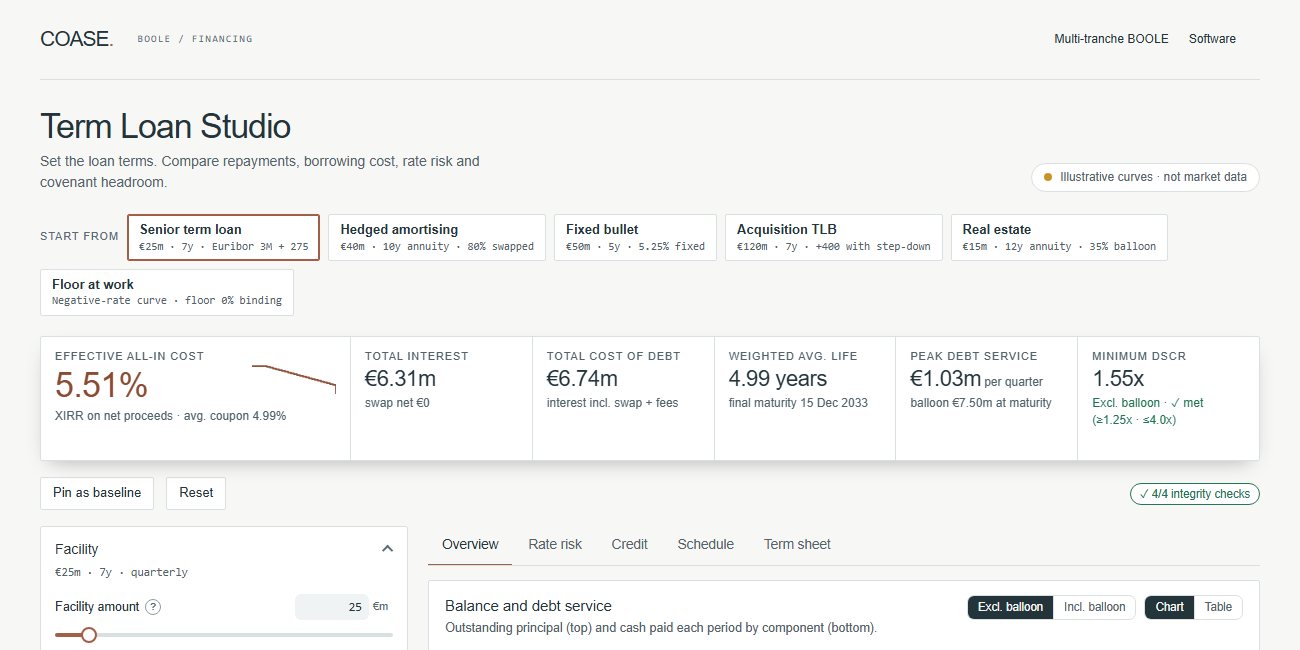
Corporate Finance, Financing and Working CapitalDebt Capacity for a Subscription TransitionA debt capacity model supported financing for growth.Read case studyClose case study+
Context
A services business sought financing while moving toward recurring subscription revenue.
Intervention
A financial model tested debt capacity and the effects of recurring revenue, customer retention and acquisition costs.
Outcome
The model supported financing assessment and investment decisions.
Performance Management and Financial ModellingConnecting the Business Plan and ForecastAn integrated plan showed how operating assumptions affected cash and funding needs.Read case studyClose case study+
Context
An industrial business needed a consistent basis for planning and updating its financial forecasts.
Intervention
A three-statement model linked operating assumptions to the income statement, balance sheet and cash flow. The same model provided a basis for periodic forecasts.
Outcome
Management could assess the plan’s funding needs and update projections when operating assumptions changed.
Performance Management and Financial ModellingBoard Reporting and Financial MeasuresA consistent board pack improved the timeliness and clarity of reporting.Read case studyClose case study+
Context
An industrial group needed more consistent management reporting and financial measures.
Intervention
Reporting definitions, reconciliations and dashboards were structured with reference to the applicable financial reporting framework.
Outcome
The board received a more consistent information package with documented performance measures.
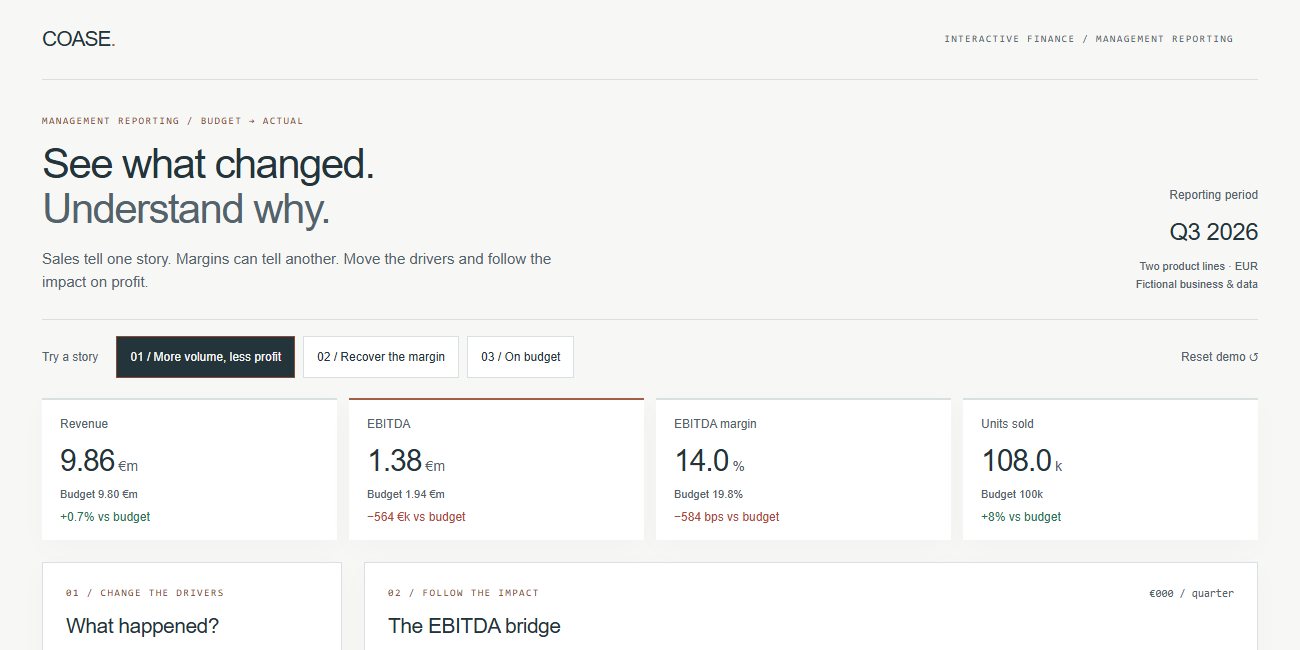
Performance Management and Financial ModellingBoard Reporting and Performance ManagementThe board pack linked financial variances to their operating drivers.Read case studyClose case study+
Context
An industrial group needed to understand which business functions and operating factors explained deviations from plan.
Intervention
The reporting pack combined operational indicators with a breakdown of variances by price, volume and mix. Cost and profit centres made responsibilities clearer.
Outcome
Management could connect variances to operational causes and document corrective actions.
Performance Management and Financial ModellingCustomer and Product ProfitabilityProfitability analysis identified opportunities for pricing and portfolio decisions.Read case studyClose case study+
Context
A manufacturing business needed greater visibility into profitability by customer and product.
Intervention
A model allocated revenue and costs to assess margins and potential pricing actions.
Outcome
The analysis supported decisions on pricing, discounts and the product portfolio.
Performance Management and Financial ModellingGroup Consolidation and Accounting HarmonisationConsistent reporting supported a faster consolidation process.Read case studyClose case study+
Context
A group with subsidiaries in multiple countries needed comparable financial information.
Intervention
Reporting definitions, intercompany reconciliation and consolidation procedures were harmonised.
Outcome
The group obtained more consistent consolidated information and a faster reporting process.
Performance Management and Financial ModellingConnecting a Financial Model to ERP DataAutomated data updates helped the finance team maintain its financial model.Read case studyClose case study+
Context
A distribution group needed to update its financial model from a new ERP during an integration.
Intervention
The work reviewed and rebuilt the integrated financial model, linked its inputs to ERP data and documented the update process.
Outcome
The finance team could refresh the model using the data feed and maintain it with the accompanying documentation.
Performance Management and Financial ModellingReviewing and Correcting a Financial ModelModel corrections informed a reassessment of projected returns and financing assumptions.Read case studyClose case study+
Context
An investor needed an independent assessment of the financial model used for an investment decision.
Intervention
The review identified and documented issues in the model. Material issues were corrected and their effect on the main outputs was assessed.
Outcome
The findings gave the investor a basis for reassessing projected returns and financing assumptions.
Operations and Commercial FinanceFinancial Support for a Supply ContractFinancial analysis supported a long-term supply bid.Read case studyClose case study+
Context
An industrial supplier needed to assess the economics and cost risks of a long-term contract.
Intervention
A business case assessed investment returns and lifecycle costs, alongside price adjustment and cost pass-through terms.
Outcome
The supplier won the contract with provisions addressing specified cost changes.
Operations and Commercial FinanceFinance and Operations for a New PlantA new foreign plant started production with local financial controls in place.Read case studyClose case study+
Context
A manufacturer needed to establish operations abroad for a supply contract.
Intervention
The work coordinated local setup, operational preparations and financial planning and reporting.
Outcome
The plant began production and local reporting supported group consolidation.
Start-Up and Scale-Up AdvisoryCash Runway for an Early-Stage Technology BusinessScenario modelling supported fundraising and cash planning.Read case studyClose case study+
Context
An early-stage business needed a credible financial plan while testing hiring and customer acquisition assumptions.
Intervention
Scenarios modelled growth, cash consumption and acquisition efficiency.
Outcome
The plan supported fundraising discussions and ongoing financial monitoring.
Start-Up and Scale-Up AdvisoryInvestor Reporting for a Digital BusinessFinancial planning and board reporting supported investor due diligence.Read case studyClose case study+
Context
A subscription-based digital business needed consistent information for investors.
Intervention
Planning and scenario analysis were centralised and board reporting was structured.
Outcome
Management obtained clearer visibility on spending and a consistent basis for due diligence.
Start-Up and Scale-Up AdvisoryCash Runway Before LaunchCash scenarios supported pre-launch planning.Read case studyClose case study+
Context
A pre-revenue digital product needed to assess cash needs before launch.
Intervention
Several scenarios linked cash consumption and hiring assumptions to product milestones.
Outcome
The scenarios provided a basis for discussing funding needs with investors.
Start-Up and Scale-Up AdvisoryUnit Economics and Fundraising for a B2B PlatformA financial model supported investor due diligence.Read case studyClose case study+
Context
A B2B platform needed to model recurring and usage-based revenue.
Intervention
Operating assumptions, staffing capacity, customer acquisition costs and customer value were modelled by segment.
Outcome
The model supported assessment of unit economics and funding needs.
Start-Up and Scale-Up AdvisoryTarget Costing for a Digital PlatformA financial model translated cash targets into operating assumptions.Read case studyClose case study+
Context
A digital services platform needed to assess which acquisition channels and prices could support profitable growth.
Intervention
A reverse-planning model linked cash targets to required volumes, conversions and spending limits.
Outcome
Management obtained a consistent basis for comparing channels and decisions.